Receiving and reconciliation
Record delivered assets against the expected schedule, capture identifying details and discrepancies, and establish the information needed to track equipment through installation and handover.

Make every asset and connection easy to trace
Physical installation sets the standard for everything that follows. O-Connect takes equipment from receiving through rack placement and cable installation, using approved elevations, topology and labelling rules to create an environment that technical teams can bring up and operations teams can understand without reconstructing how it was built.

The work begins at goods-in, where delivered items are reconciled against the expected equipment schedule and discrepancies are captured before they travel into the build. Rack assembly, placement and equipment installation follow the approved plan, with changes referred back to the responsible owner rather than disappearing into informal decisions on the floor.
Cabling is treated as a documented part of the system. Copper and fibre connections follow the agreed pathways and port assignments, with labels and records that connect the installed asset to its intended destination. Physical completion is reviewed against the build scope so later fabric, platform and acceptance work starts from a known position.
Record delivered assets against the expected schedule, capture identifying details and discrepancies, and establish the information needed to track equipment through installation and handover.
Install racks and equipment to the approved layout and elevations, coordinating site access, handling arrangements and build sequencing with the people responsible for the facility.
Install and label the scoped cable connections to the agreed topology and routing standard, maintaining clear identification between equipment, ports and their documented destinations.
Compile rack elevations, asset locations, port maps and cable matrices that reflect the delivered build, including approved deviations and outstanding items requiring further project action.
Confirm site readiness, equipment schedules, rack elevations, connection maps and labelling rules, then agree how installation changes and delivery discrepancies will be reviewed and recorded.
Reconcile equipment at receiving, complete the planned rack and cable work, and capture installation records as assets and connections move into their approved physical positions.
Review the installed environment against the scope and records, resolve or assign discrepancies, and provide a clear physical handover for the next technical workstream.
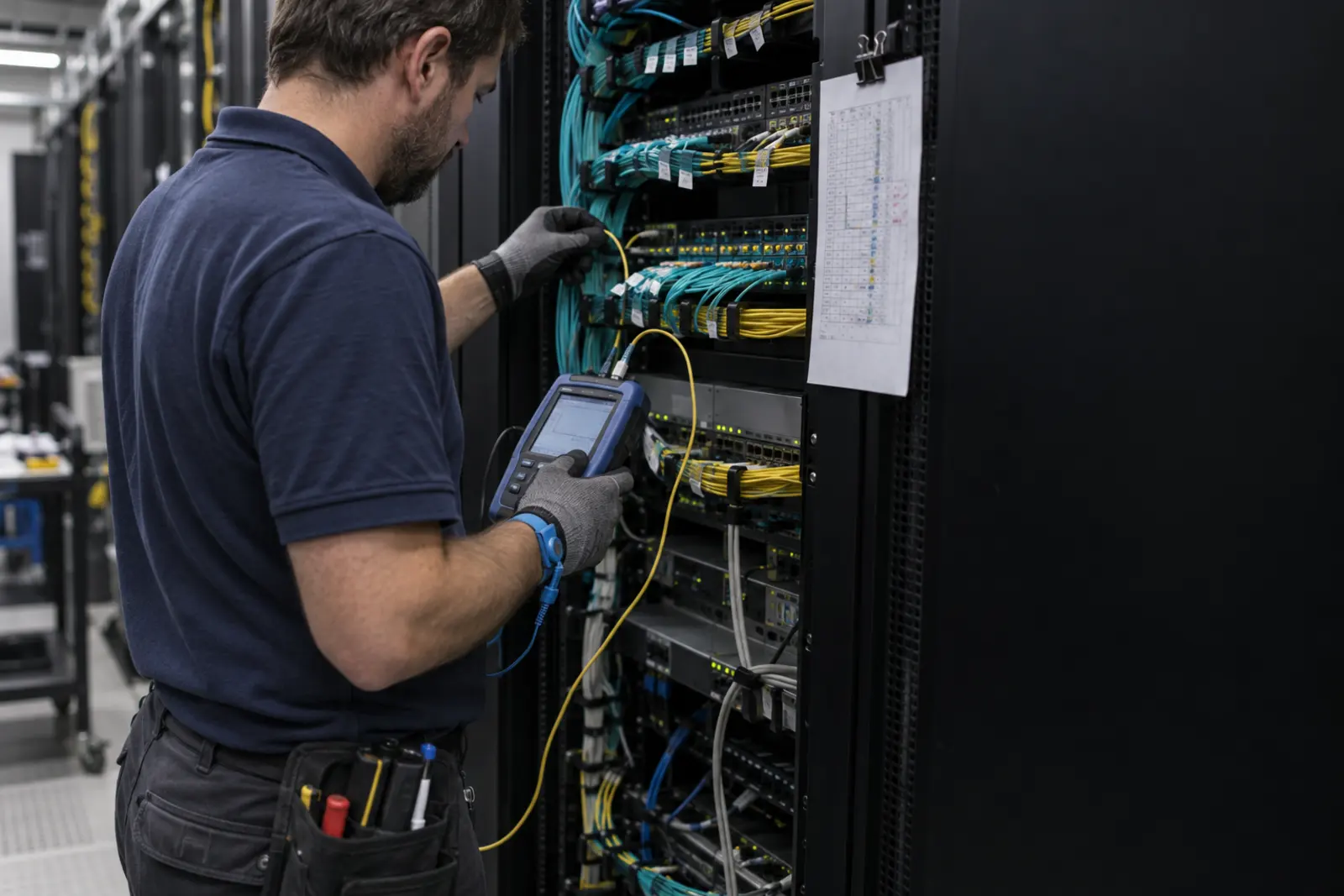
The installed environment has a traceable relationship between the equipment schedule, physical rack positions and cable endpoints. Technical teams receive an organised basis for bring-up, while operations gains usable records that support fault isolation, planned changes and future expansion without relying on installation-day memory.
Define your acceptance criteriaYes. The scope can focus on agreed additions or changes within an existing build. Current rack records, live-service boundaries and access constraints need to be reviewed first so the installation plan reflects the environment and its change-control requirements.
Receiving discrepancies are recorded against the expected schedule and referred to the nominated project owner. The team can then agree the effect on sequencing and any approved change, keeping the installation record aligned with what was actually received and installed.
Physical completion establishes the installed and documented build. Platform configuration, fabric verification and workload acceptance are separate workstreams that can be connected to the scope. Their boundaries and evidence requirements are agreed before delivery so handover expectations remain clear.

Prepare your data center for delivery with power, cooling, rack, access and pathway reviews that make installation dependencies and ownership clear.
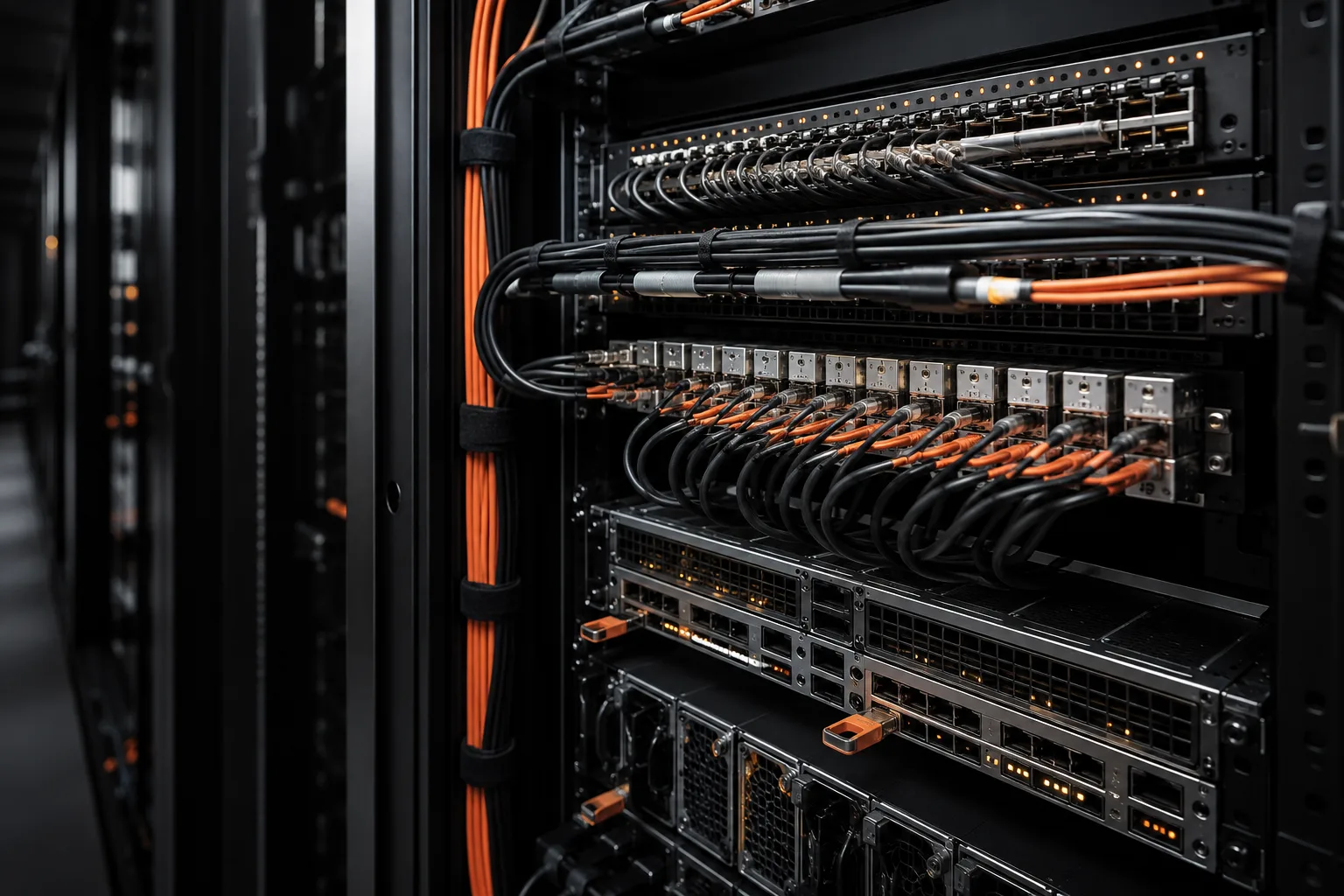
Implement the approved data center fabric across Ethernet or InfiniBand, management and storage paths, with port records and end-to-end verification.
Build an evidence-based handover with agreed checks for firmware, hardware health, thermal behaviour and workloads across the deployed infrastructure.