Dependency and ownership map
An agreed view of equipment, connections and service owners within the project scope, highlighting dependencies that must be addressed before infrastructure work can proceed.

Move infrastructure with the business in view
An enterprise infrastructure change reaches beyond the equipment being moved or replaced. Application owners, network teams and service operations need a shared sequence and clear decision points. O-Connect turns those requirements into practical field execution, with dependency checks, agreed change windows and documentation that supports the people who inherit the environment.
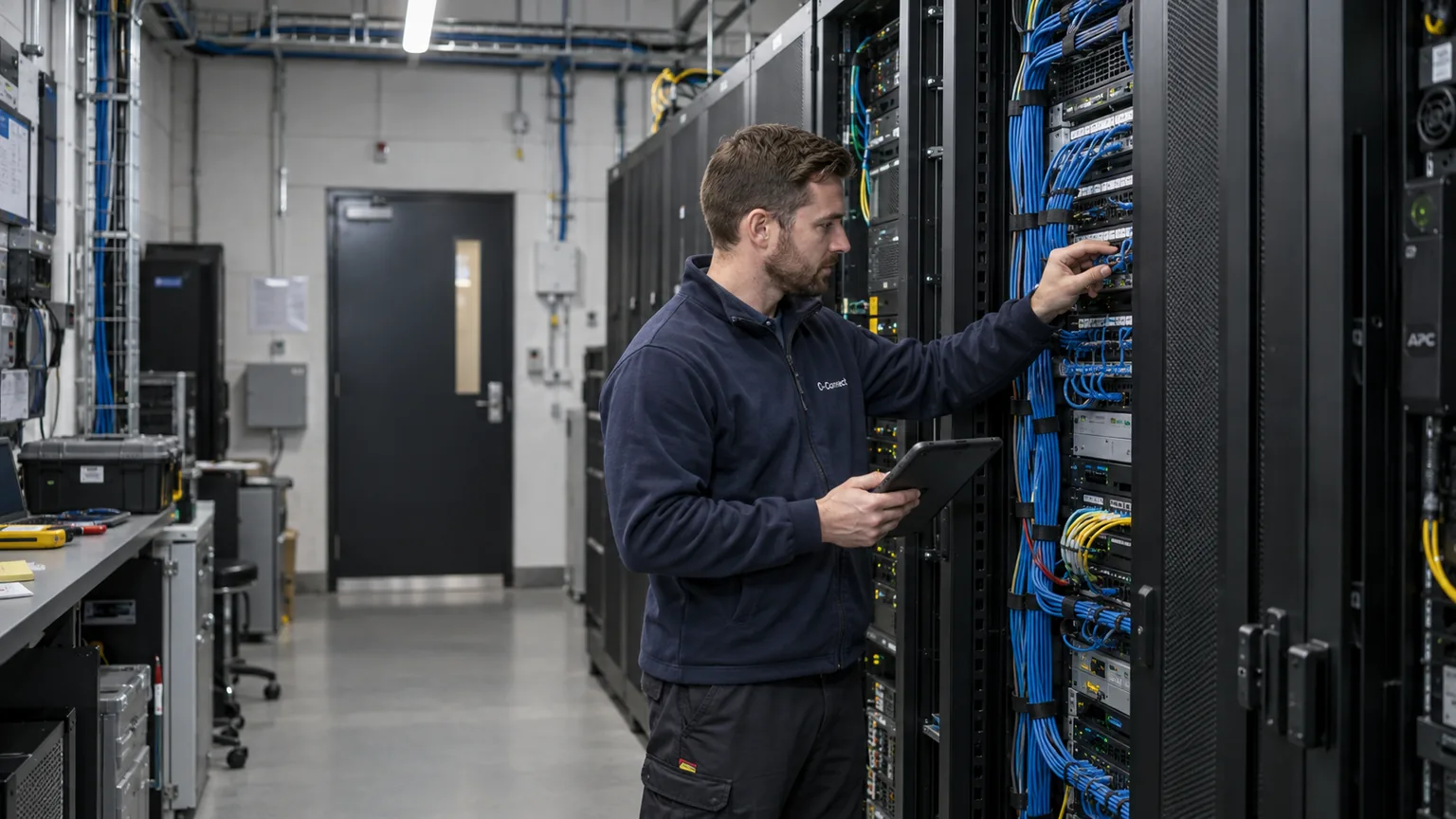
Planning begins with the systems in scope, their owners and the connections that must be preserved or changed. We reconcile the physical inventory with the approved target layout and review site access, rack capacity, network availability and the proposed work window. Gaps are raised early enough for the customer to resolve them before execution.
The change plan makes business and technical decisions visible at each stage. It names the people authorised to release work, assess service checks and initiate the agreed fallback. O-Connect executes the field activities within that plan, maintaining asset and connection records while application owners and internal teams confirm the services for which they are responsible.
An agreed view of equipment, connections and service owners within the project scope, highlighting dependencies that must be addressed before infrastructure work can proceed.
A practical installation or migration sequence with release points, communications, fallback conditions and allocated responsibilities, aligned to the customer's approved business and maintenance windows.
Updated rack positions, asset identifiers and connection records for the equipment changed, giving internal teams a usable reference for support and subsequent infrastructure planning.
A coordinated closeout record bringing field checks together with customer-owned service validation, open issues and the specific acceptance decisions required from each responsible team.
Confirm equipment and service scope with internal owners, reconcile the source and target environments, and identify the dependencies that constrain the proposed change window.
Perform the agreed physical work through named checkpoints, reporting progress and exceptions so the customer can make informed decisions during the active change window.
Coordinate completion checks, reconcile the final installation records and review remaining actions with service owners before handing the changed environment to the internal operations team.
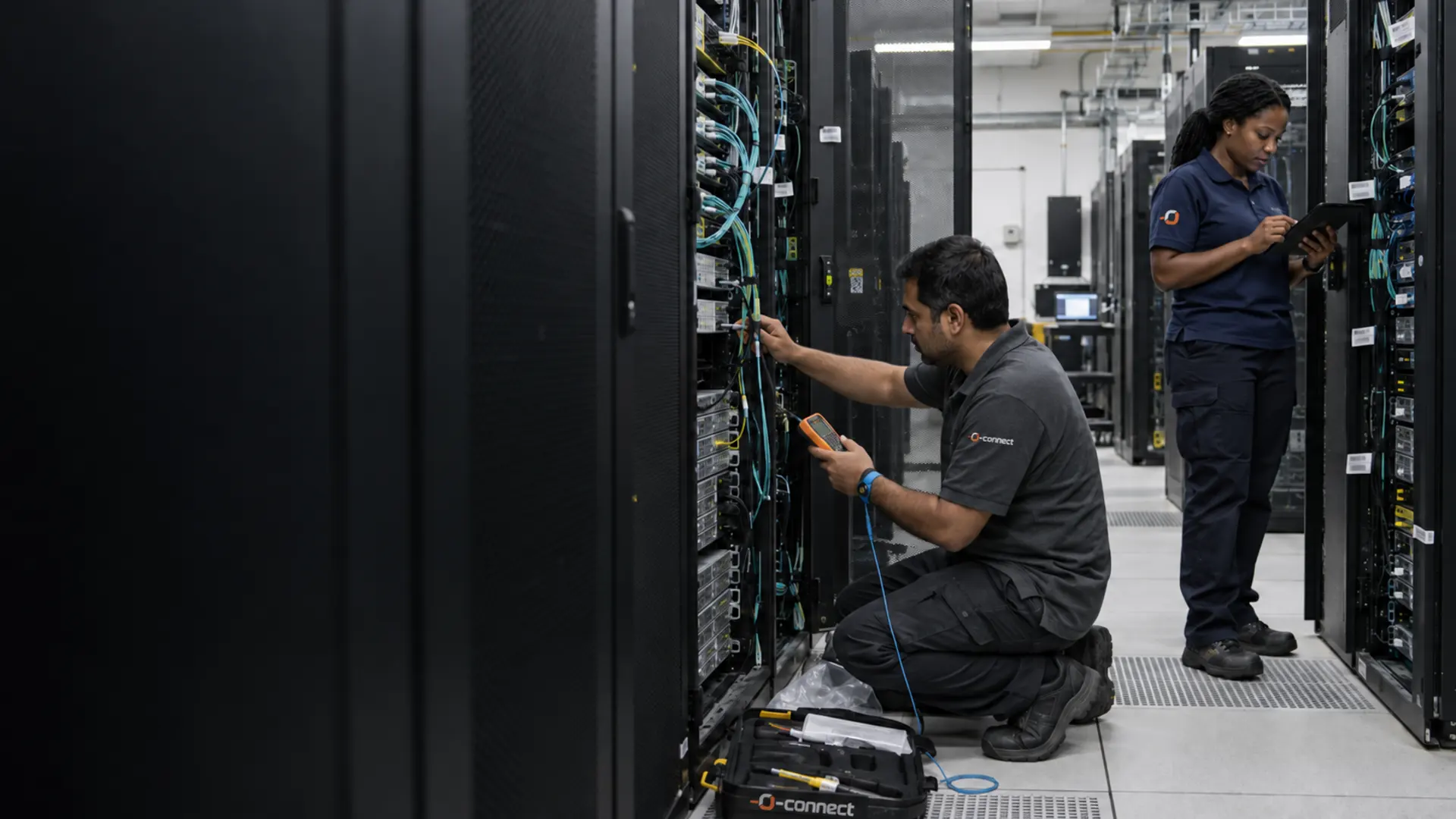
Infrastructure work closes with a clear account of what changed, which checks passed and what still needs attention. Internal teams receive current records and explicit ownership of outstanding actions, helping the customer transition from the change window into ordinary support with fewer unanswered questions.
Define your acceptance criteriaYes. The sequence is built around the approved window, access arrangements and required service checks. We identify preparatory work that can be completed beforehand and agree the decision points at which the customer will continue, hold or invoke its fallback plan.
Application and service owners retain responsibility for their functional acceptance unless a different scope is explicitly agreed. We coordinate the physical and connectivity evidence with their checks, recording the results and any dependencies that prevent a complete service acceptance decision.
A scoped discovery and reconciliation stage can establish the equipment and connections needed for the change. Unverified dependencies are flagged for customer review. The final runbook is based on confirmed information, with unresolved items carried as explicit constraints on execution.

Plan infrastructure moves around dependencies, change windows and acceptance gates, with reconciled assets, clear cutover ownership and rollback criteria.
Turn delivered equipment into an installed, labelled environment with asset reconciliation, approved rack builds, cable installation and as-built records.
Support live infrastructure with scoped smart hands, break/fix coordination, adds, moves and changes, backed by clear work instructions and updated records.