Rack readiness record
A documented view of each rack's placement, power and cooling dependencies, identifying open conditions and the teams responsible for resolving them before equipment installation.

Bring the whole cluster into readiness
Accelerated compute projects bring facilities, hardware and network decisions into the same critical path. O-Connect coordinates the fieldwork between those disciplines, turning the approved design into an installed, connected and tested environment. Acceptance is defined around the intended workload and agreed operating conditions, with ownership clear at every interface.
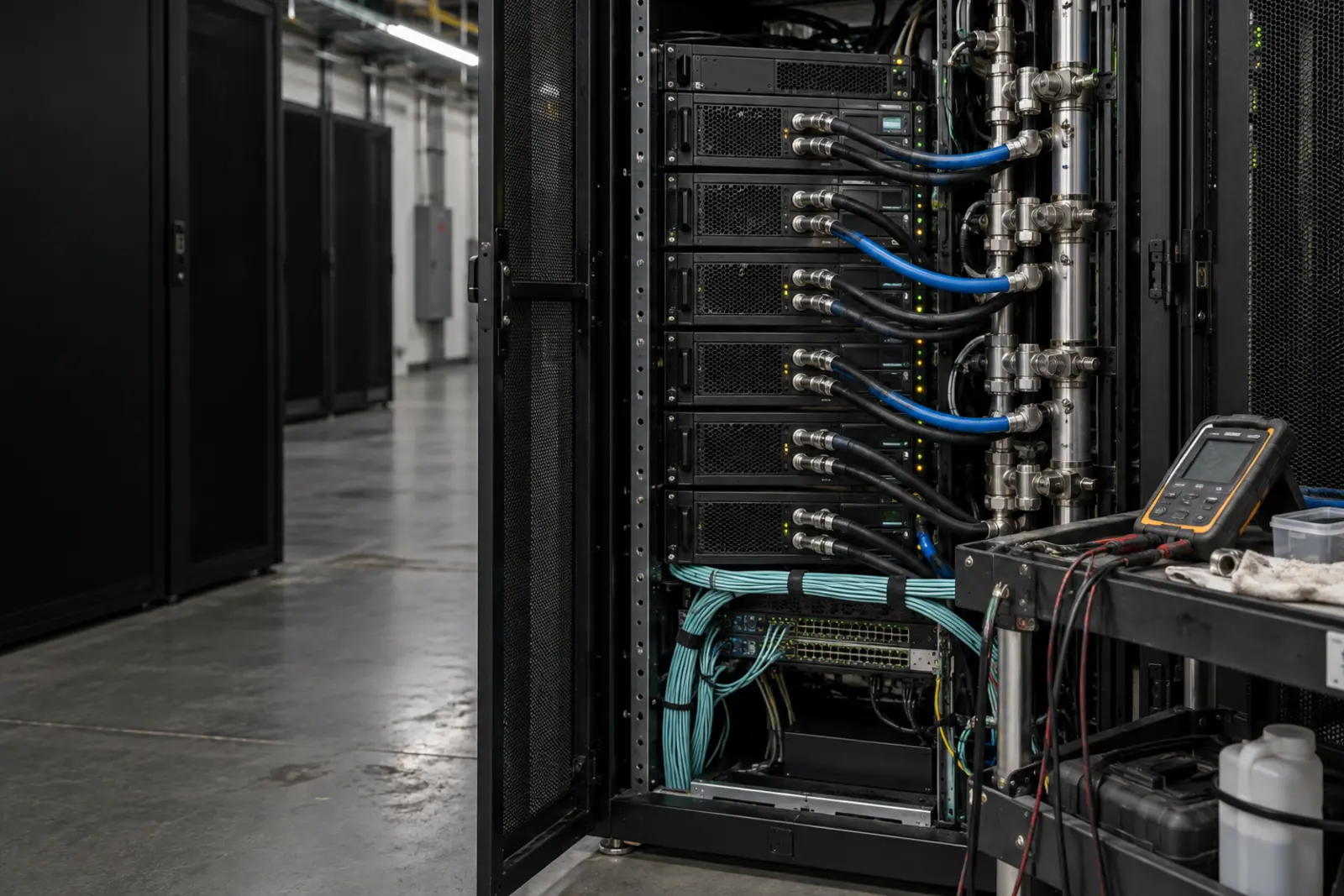
Readiness starts before equipment reaches the loading bay. We review the approved rack arrangement, delivery route, power allocation, cooling interfaces and network plan with the responsible teams. Where liquid cooling forms part of the design, connection procedures, specialist responsibilities and release criteria are agreed with the facilities team and equipment suppliers before installation begins.
Installation then follows a controlled sequence across compute, management and fabric connections. Component checks build toward the agreed cluster tests, with configuration references and physical observations retained alongside results. Workload selection, test duration and acceptance thresholds are set with the customer so that a successful power-on is one documented milestone within the wider readiness assessment.
A documented view of each rack's placement, power and cooling dependencies, identifying open conditions and the teams responsible for resolving them before equipment installation.
Port mappings, cable identifiers and agreed connection checks across compute, management and fabric networks, with discrepancies recorded against the approved topology for engineering review.
Results from the customer-approved validation plan, including test conditions, observed exceptions and supporting records that help engineering teams assess readiness for the intended workload.
Installed asset records, approved configuration references and maintenance access information assembled for the receiving team, with unresolved dependencies assigned to named owners during handover.
Bring facilities, OEM and cluster engineering owners together to confirm prerequisites, specialist boundaries and the conditions required to release each installation stage for work.
Install and connect the approved equipment in an agreed sequence, checking physical details and capturing issues before they propagate into the wider cluster build.
Run the agreed checks and representative workload tests with engineering owners, then review results, exceptions and operating documentation before the customer makes its acceptance decision.

The result is an installed cluster with a traceable path from physical readiness to workload validation. Your engineering team receives the information needed to judge acceptance, understand remaining constraints and take operational ownership, with equipment, facilities and integration responsibilities documented together at the final handover.
Define your acceptance criteriaWe agree the validation plan with the customer and relevant engineering owners before execution. It identifies the topology, test conditions, representative workloads, expected results and exception process. Performance acceptance remains tied to that agreed scope and the configuration actually tested.
Liquid-cooled equipment can be planned within a coordinated deployment scope. Facilities interfaces, connection procedures and specialist tasks must first be assigned to appropriately authorised teams. The work follows the approved design and supplier instructions, with documented release points before equipment operation.
We record the missing prerequisite, its impact and the owner needed to resolve it. The deployment sequence can then be reviewed with the customer. Affected activities remain subject to the agreed release conditions, and any revised acceptance scope is documented.
Coordinate GPU nodes, fabric, storage and platform baselines through AI cluster deployment, with defined dependencies, health checks and acceptance evidence.
Implement the approved data center fabric across Ethernet or InfiniBand, management and storage paths, with port records and end-to-end verification.
Align dense compute requirements with site power, cooling, rack layouts and logistics, with clear facility interfaces and documented readiness dependencies.